
IT-Days 2025
Thinking outside the box
Data science, AI, and cloud architectures are at the heart of what we do every day, but it’s important to step outside your own ‘bubble’ sometimes. This is precisely what our colleagues Katharina Anderer, Sebastian Drewke and Alina Dallmann did in mid-December, when they attended IT-Days 2025 at the Frankfurt Congress Centre.

Katharina Anderer, Sebastian Drewke and Alina Dallmann were at the conference.
Our impressions of IT-Days 2025
Unlike Python and data-related conferences such as PyCon, PyData, or M3 (Minds Mastering Machines), IT Days covers a wide range of topics. The program covered the entire spectrum of computer science: from software architecture and DevOps to agile methods and socially relevant topics such as digital sovereignty.
The conference was excellently organized. The only downside was that, due to the time of year, some presentations were unfortunately canceled at short notice. The breadth of the program was great for broadening our horizons and gaining inspiration from other disciplines, even if this naturally left a little less time for technical depth.
Our contribution: Scalable RAG systems in practice
We find the transfer particularly exciting: How can the proven principles of general software development be applied to the field of generative AI? While many AI projects begin as experimental prototypes, it soon becomes clear that factors such as clean modularisation, asynchronous interfaces, and robust monitoring — in other words, traditional craftsmanship — determine whether an application is fit for purpose.
This is precisely the topic of our data scientist Alina Dallmann’s presentation, ‘Scalable RAG: From Prototypes to Production-Ready Architectures‘. She demonstrated that, thanks to modern frameworks, building a RAG (retrieval-augmented generation) system as a prototype can be done in a matter of hours. The real challenge begins when the system, such as our SciRAG, has to ‘grow up’ — that is, become scalable, robust, and maintainable.
Some key points from Alina’s presentation:
- Event-based processing: Using event-based methods, such as a message queue and specialised processing containers, allows documents to be processed asynchronously and scaled horizontally depending on the load
- Metadata is key: A vector space alone is insufficient for enterprise requirements. Clean metadata is essential for the necessary filtering within authorisation concepts and for contextualising responses
- Precision instead of gut feeling: Pure uptime metrics say nothing about the quality of AI responses. Early evaluation pipelines and tracing systems (such as LangFuse) build trust and prevent regressions when system changes are made
- Flexibility for agents and workflows: Whether fixed AI workflows or autonomous agents, MCP provides the appropriate framework for a variety of use cases
Conclusion
The IT Days provided us with a valuable opportunity to expand our horizons beyond the worlds of Python and data science. The insights gained in Frankfurt, whether concerning agile working methods or cloud system architecture, are being incorporated directly into our daily work.
You can download Alina’s presentation on ‘Scalable RAG Systems’ as a PDF here.
Browse through the presentation
Authors
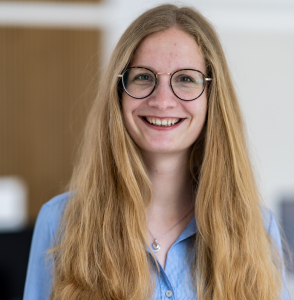
Alina Dallmann, Data Scieneer at scieneers GmbH
alina.dallmann@scieneers.de
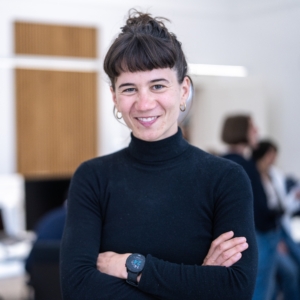
Katharina Anderer, Data Scieneer at scieneers GmbH
katharina.anderer@scieneers.de

Sebastian Drewke, Data Scieneer at scieneers GmbH
sebastian.drewke@scieneers.de